Capability, or just headcount? Know before you sign.
Atlas models both organizations as one: every function, seat, and skill of the combined firm on day one, run through the same capacity engine as your live pipeline.
Who owns the capability, and where
An org chart tells you how many people you are buying. It cannot tell you what they can actually deliver, and delivery is the only thing the deal is for.
Atlas maps the target the same way it maps your own firm: from the published record, seat by seat, with every claim cited. Then it lays both maps on top of each other.
- True capability vs headcount, counted seat by seat instead of guessed from an org chart
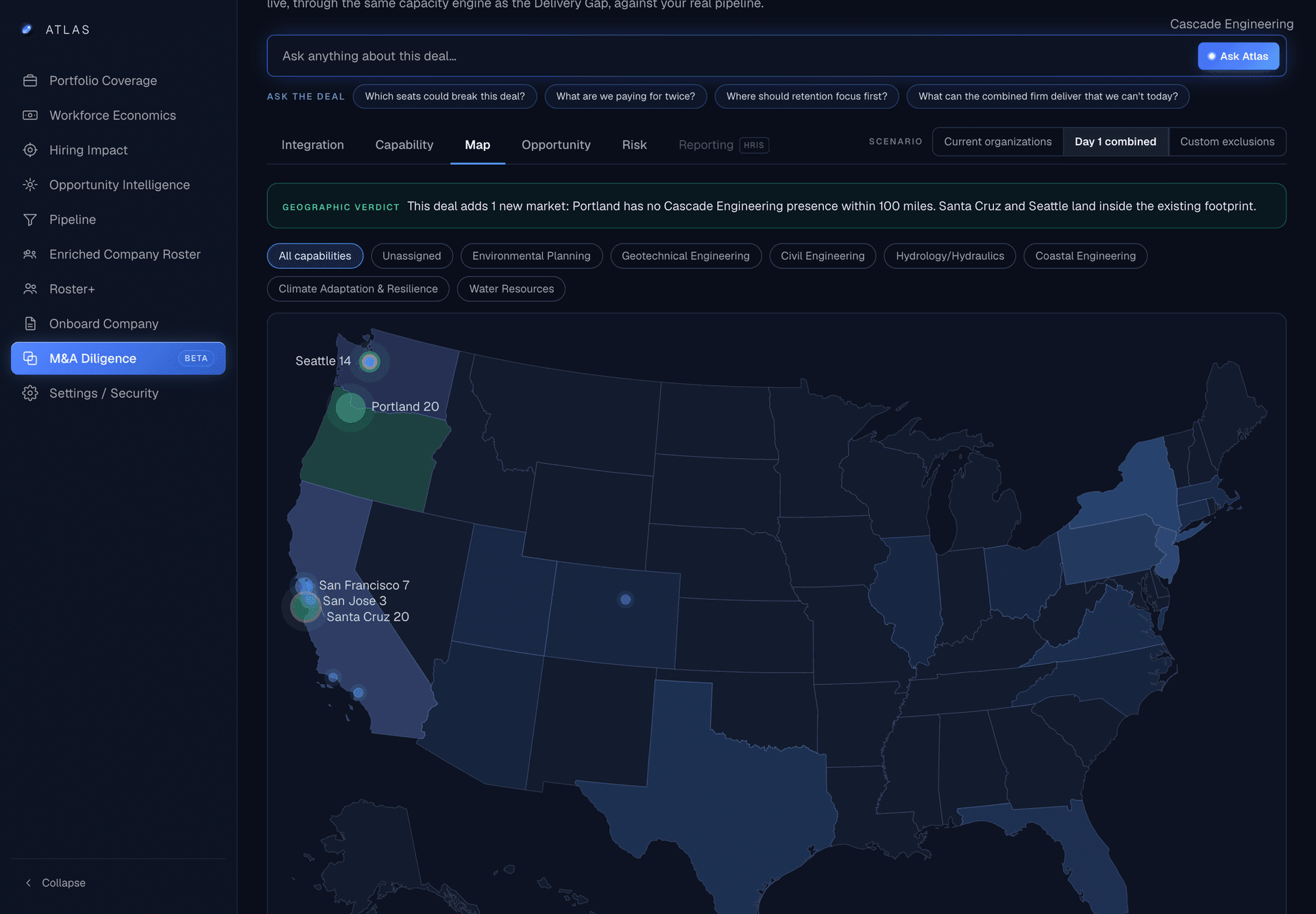
- Who owns each capability and where they sit: named seats, offices, and real drive distances from yours
- Capability overlap in plain sight: what the deal genuinely adds, and what you are paying for twice
Question the deal like it already closed
The combined firm becomes a digital twin you can interrogate, before a dollar moves. Every answer cited, every score from deterministic math.
Seat by seat
Bench duplication and new capability counted from evidence, not the pitch book.
Market by market
The geographic verdict: which markets the deal actually adds, within real drive distances of your offices.
Answer by answer
Which seats could break it, where retention focus lands first, what the combined bench unlocks.
Same engine, same rules as every Atlas answer: AI finds the evidence, math does the scoring, and nothing locks until three independent sources agree.